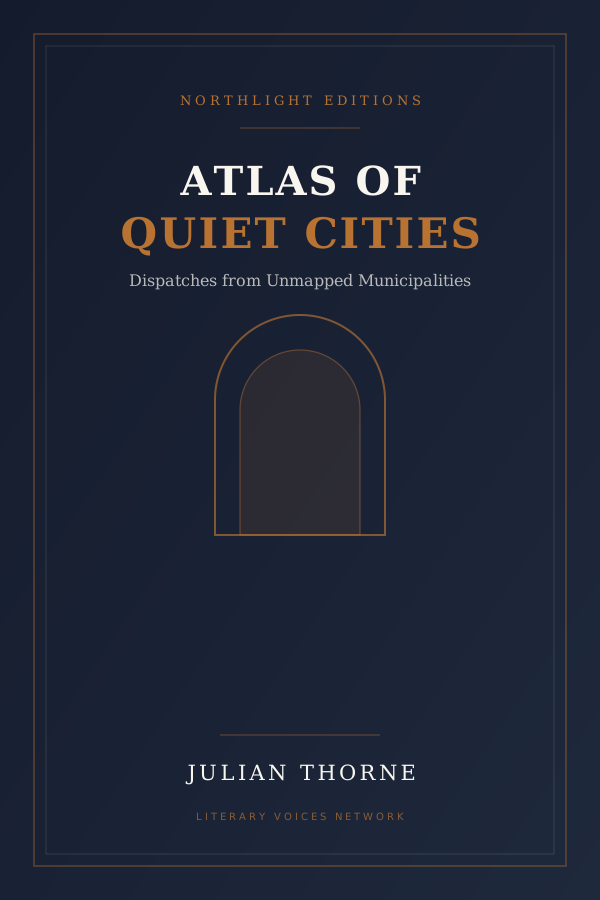
Few contemporary novelists write about physical space with the tactile precision of Julian Thorne. In Atlas of Quiet Cities, he introduces us to Martin Vale, an acoustic engineer commissioned to record the impulse responses of seven municipal reading rooms and concert halls before their demolition.
A Cartography of Resonance
Rather than treating architecture as a static backdrop, Thorne treats every timber truss and plaster dome as an instrument that has absorbed decades of human speech. When Vale discovers anomalies in the recordings—intervals of silence that do not match the geometry of the rooms—the novel deftly pivots from realist character study into philosophical suspense.
“Thorne’s triumph is that he never forces the metaphor. The technical vocabulary of acoustics becomes a deeply humane language for grief and endurance.”
Essential reading for admirers of W. G. Sebald, Italo Calvino, and precision-crafted speculative prose.

Marcus Sterling
Marcus Sterling leads editorial moderation and long-form essay commissioning at Literary Voices Network. A former university press acquiring editor, he curates LVN's seasonal issues and hosts 'First Editions Live'.