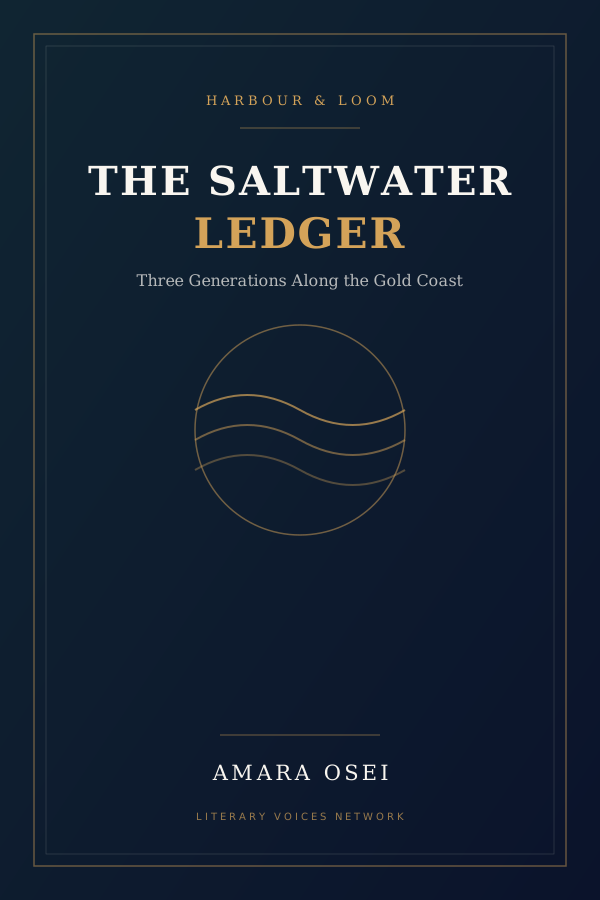
Shortly after the publication of The Saltwater Ledger, novelist Amara Osei joined Founding Publisher Eleanor Vance in the LVN studio to discuss how a nineteenth-century shipping register inspired her most ambitious book to date.
On Discovering the First Ledger
Eleanor Vance: The Saltwater Ledger begins not with a human character, but with a bound volume of indigo-dyed rag paper. Where did that image originate?
Amara Osei: Five years ago, while researching coastal trade routes in Accra and Liverpool, I came across a clerk’s ledger where the official cargo tallies occupied the recto pages, while the verso pages had been used thirty years later by the clerk’s granddaughter to draft poems and political broadsides. That dialogue across generations inside a single physical object became the spine of the novel.
“Paper remembers what official monuments are designed to omit. Once a family acquires a printing press, their private griefs and public arguments acquire permanence.”
On Voice and Pacing
Eleanor Vance: The novel moves across three distinct eras—1912, 1957, and 1994. How did you differentiate those voices without losing narrative momentum?
Amara Osei: I read every chapter aloud before revising. Each generation has its own acoustic signature: the measured epistolary cadence of 1912, the urgent pamphlet-inflected syntax of the 1950s, and the reflective scholarly voice of the 1990s.

Eleanor Vance
Eleanor Vance is the Founding Publisher and Editor-in-Chief of Literary Voices Network, as well as the author of two novels and a collection of critical essays on twentieth-century translation and archival memory. She hosts 'The Meridian Conversation' on LVN Broadcasts and regularly publishes original literary criticism, author interviews, and fiction under her public LVN profile.